

Dangote Calls for CCB Investigation into NMDPRA CEO Farouk Ahmed Over Alleged Corruption and Fuel‑Import Irregularities
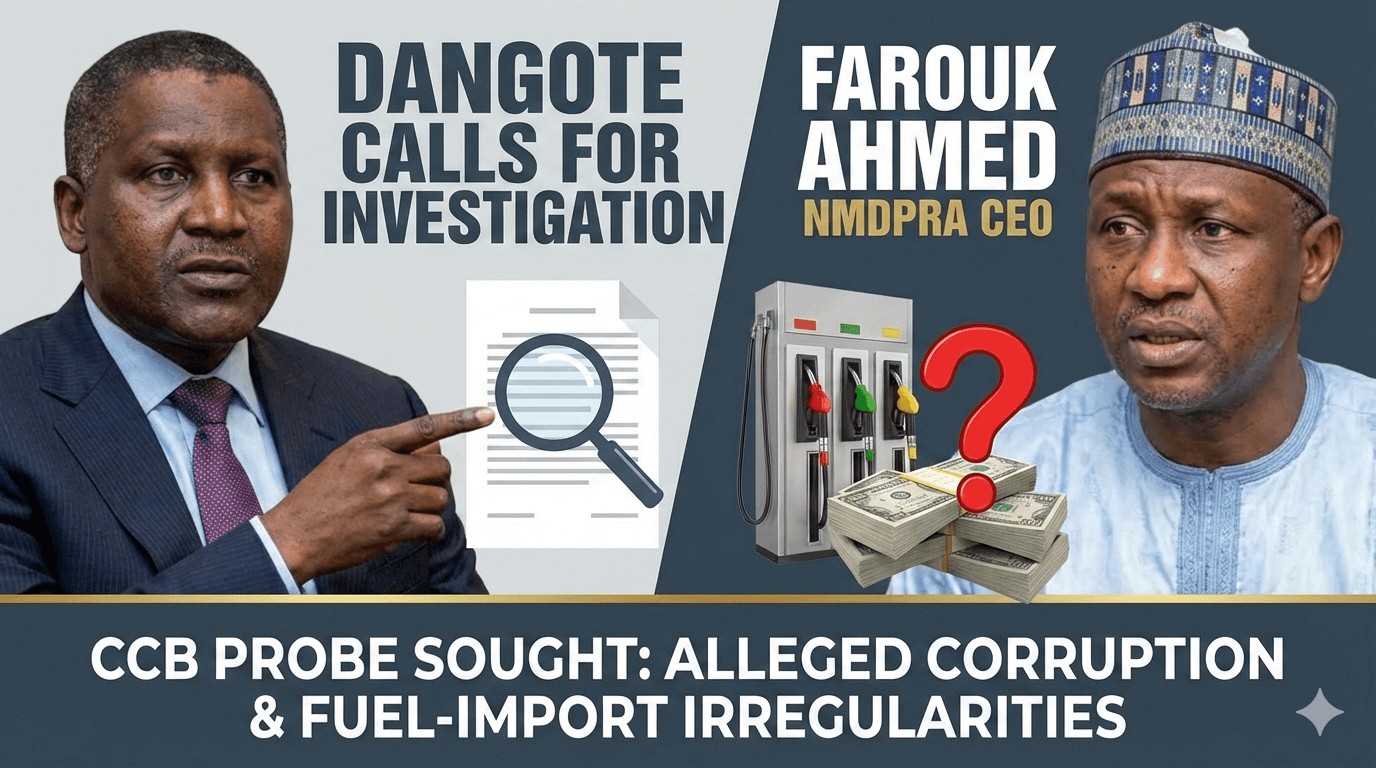
Nigeria’s oil landscape has been thrust into the spotlight again as Aliko Dangote, the chairman of the Dangote Group, publicly accused the chief executive of the Nigerian Midstream and Downstream Petroleum Regulatory Authority (NMDPRA), Engr. Farouk Ahmed, of corruption and economic sabotage. In a press briefing held at the Dangote Petroleum Refinery in Lagos on December 14, 2025, Dangote alleged that Ahmed spent roughly $5 million on the secondary‑school education of four of his children in Switzerland—a sum he says is incompatible with a public‑sector salary. He also claimed that the NMDPRA has been issuing excessive import licences for refined petroleum products, undermining domestic refining efforts and costing the nation billions in foreign exchange.
The billionaire industrialist framed his remarks as a call for transparency, urging the Code of Conduct Bureau (CCB), the Economic and Financial Crimes Commission (EFCC), and the Independent Corrupt Practices and Other Related Offences Commission (ICPC) to open a joint probe. “The regulator should be above suspicion,” Dangote said, according to multiple news outlets covering the event. “If there are gaps between declared income and major expenditures, the appropriate bodies must examine the facts.”
Why the allegations matter
The NMDPRA is responsible for licensing, pricing oversight, and ensuring fair competition in Nigeria’s downstream oil sector. Any perception that its leadership may be benefiting from import licences or living beyond known means can erode investor confidence and fuel public frustration. Dangote’s own refinery, which began operations earlier this year, is positioned as a cornerstone of Nigeria’s push to reduce fuel imports and stabilise prices. The refinery’s capacity of 650,000 barrels per day could theoretically meet a substantial portion of domestic demand, yet it continues to face competition from imported gasoline, a situation Dangote attributes to regulatory decisions that favour importers
Key points from Dangote’s accusations
- Unusual foreign‑school fees: Dangote highlighted the $5 million figure for Swiss secondary‑school tuition, questioning how a civil servant could afford such an expense without additional, undisclosed income .
- Excessive import licences: He noted that the NMDPRA had granted licences for about 7.5 billion litres of premium motor spirit (PMS) for the first quarter of 2026, despite the refinery’s domestic output .
- Potential conflict of interest: The billionaire argued that a regulator should not simultaneously act as a trader, warning that such overlap could distort pricing and discourage investment
Responses and the path forward
As of the latest reports, the NMDPRA and Engr. Farouk Ahmed has not issued a formal rebuttal to the specific claims. Civil‑society groups such as the Socio‑Economic Rights and Accountability Project (SERAP) have echoed Dangote’s call for an investigation, emphasizing that public officials must be held to the highest standards of accountability . Conversely, some analysts caution that allegations alone do not constitute proof and stress the importance of due process, noting that the regulator has previously described similar accusations as “unfounded” .
Nigerian law requires public officers to declare assets upon appointment, at regular intervals, and upon leaving office. The CCB is mandated to verify these declarations, and any discrepancies can trigger disciplinary action, including removal from office and forfeiture of illicit assets . If the anti‑corruption agencies launch a formal inquiry, the outcome could set a precedent for how Nigeria’s energy sector regulators are scrutinised in the future.
What this means for Nigeria’s oil sector
- Investor confidence: Transparency in regulatory leadership is crucial for attracting both domestic and foreign investment in the downstream sector.
- Fuel price stability: Resolving the import‑licence controversy could enable the Dangote Refinery to operate closer to capacity, potentially lowering pump prices for consumers.
- Governance reforms: A thorough probe may prompt broader reforms aimed at separating regulatory functions from commercial interests, aligning Nigeria’s practices with international best practices.
The unfolding dispute underscores the delicate balance between promoting private investment and maintaining robust oversight in a sector that remains vital to Nigeria’s economy. As the nation watches the CCB and other agencies consider the allegations, the focus will likely shift to whether the investigative process can deliver credible, impartial results that restore public trust.
VIDEO
Stay tuned for updates as the story develops.